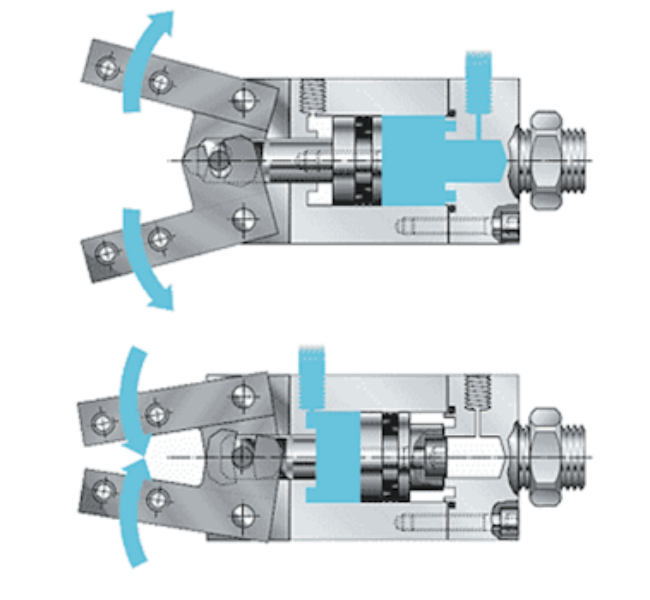
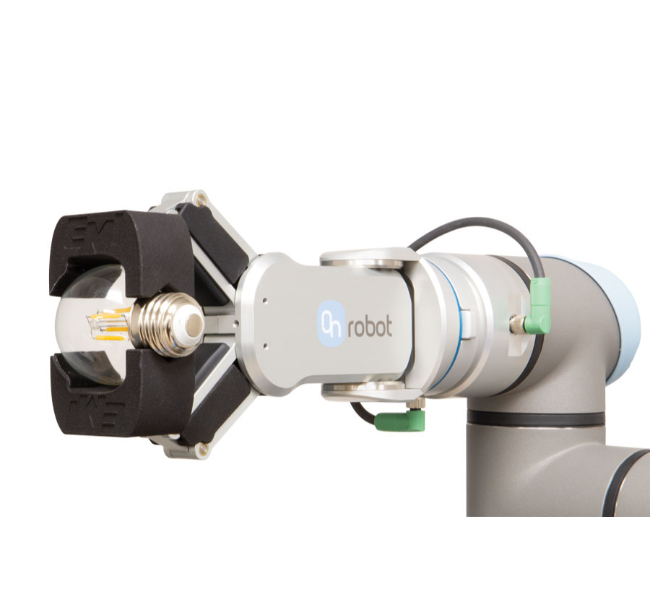
Pneumatic grippers rely on pistons and compressed air to offer exceptionally strong lifting and gripping actions for heavy items that cannot be moved by electric grippers. When triggered by the force of compressed air, these grippers grasp, lift, or move the item, and then release the item when the flow of compressed air decreases or stops.
Industries where pneumatic grippers are essential for streamlining operations include but are not limited to the following:
Medical Device/Biotech/Pharmaceutical
Robotics
Plastic Injection & Molding
Semiconductor & Bearing Manufacturing
Automobile Parts Manufacturing
Aerospace
“Pneumatic-mechanical gripper benefits include large grip force range and easy implementation, which make them ideal for pick-and-place applications..” Winger
Force Levels of Pneumatic Grippers
The force level of individual pneumatic grippers is calculated according to pounds per square inch of compressed air resistance. Increasing the amount of air pressure injected into them by 30% will increase grip strength by 30%. Despite this, all pneumatic grippers are controlled by a maximum air pressure value that prevents overload.
Overview & Function Of Pneumatic Grippers
Pneumatic grippers are available in a variety of different sizes and grip force capacity. They can be further optimized by placing control switches or proximity sensors alongside a gripper. Sensors not only detect gripper location, but also manage precise locations of gripper “fingers,” such as whether they are open or closed.
Pneumatic grippers are sometimes referred to as a type of pneumatic actuator. Tie-rod cylinders, pneumatic motors, and vacuum generators are also considered pneumatic actuators. They also offer exceptional support for industries operating mostly on automated processes. In addition to improving employee safety by reducing the risk of manually-caused accidents, grippers also increase productivity and substantially reduce downtime by centralizing production systems.
Prepare Documentation
Industry Standard Dummy
Brand Consistency
When choosing a pneumatic gripper design, you should rely on the following criteria:
Weight of the Items Being Gripped/Gripping Force Capacity Air Friction/Air Pressure Configuration of the Items Intended for Movement Grip Type When it comes to configuration, the shape of the items determines how many fingers a gripper should have. Three-fingered grippers are needed for oval, cylindrical, or round shapes, while two-fingered grippers work well for all other item shapes.
GripShape is an industry-leader provider of custom gripper designs. If you’re not sure what type of pneumatic gripper design is best for your application, we’re ready to help. Contact us today for more information, or to request a custom quote.